EPFO 3.0 and PF Changes to Look Out for in 2027
Explore the EPFO 3.0 framework, proposed PF withdrawal changes, SWP and UAN contributions. Find out what members should look out for in 2027.
EPFO 3.0 and PF Changes to Look Out for in 2027
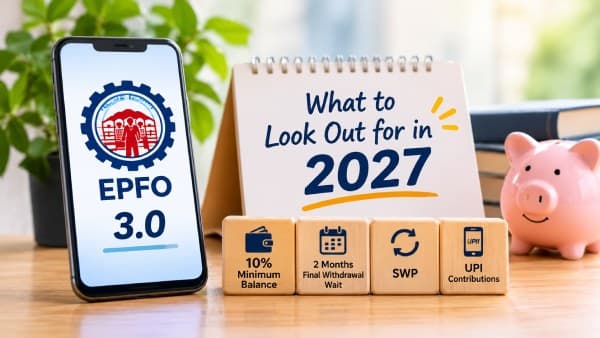
Quick answer: The EPFO board has approved changes to PF minimum balance, final withdrawal waiting periods and retirement payouts. EPFO 3.0 will modernise digital services, but several approved proposals still await formal notification.
Introduction
Your Employees' Provident Fund is meant to support you over the long term. It builds up through contributions made during your working years, and it can become an important source of financial support when you retire or need to meet certain expenses. So when the rules around PF withdrawals or access to your account change, it is worth understanding exactly what those changes mean.
There have been several important EPFO developments, including changes approved at the 240th meeting of the Central Board of Trustees and the wider technology upgrade known as EPFO 3.0. Some decisions relate to how much money members may be able to withdraw and when. Others are about improving EPFO's digital services and making contributions more flexible.
In this guide, we explain the decisions announced by the government, what has already been provided for under the current EPF Scheme, and which proposals still need formal approval or implementation guidelines. This will help you understand what is changing without confusing a board approval with a rule that is already available to use.
PF Changes Approved at the 240th CBT Meeting
The Central Board of Trustees (CBT) is the apex decision-making body of EPFO. At its 240th meeting on 19 November 2026, the Board approved important proposals relating to PF withdrawals and contributions. The Ministry of Labour and Employment announced these decisions in its official release following the 240th CBT meeting.
1. PF minimum balance reduced from 25% to 10%
The Board approved reducing the minimum balance that must remain in a member's PF account from 25% to 10%. Under the current Employees’ Provident Funds Scheme, 2026, the minimum balance for partial withdrawals is calculated as 25% of the total contributions credited to the member, including both the employee’s and employer’s shares and the interest earned on them.
If the approved reduction is brought into force, members will be able to access a larger portion of their eligible PF balance through partial withdrawals while retaining 10% in the account. The change is intended to provide greater access to savings while keeping a portion invested for long-term financial security.
2. Final PF withdrawal waiting period reduced from 12 months to 2 months
The Board also approved reducing the waiting period for final PF settlement after leaving employment from 12 months to 2 months. Under the current EPF Scheme, a member generally has to remain unemployed for a continuous period of 12 months before applying for final settlement, subject to the exceptions specified in the Scheme.
Once the approved change is formally implemented, eligible members may not have to wait as long to access their PF after leaving employment. This can make a difference to people who are between jobs or need access to their accumulated savings after leaving work.
3. Systematic Withdrawal Plan for retiring EPF members
The Board approved a Systematic Withdrawal Plan (SWP) that will allow retiring EPF members to receive their accumulated PF savings in instalments instead of withdrawing the entire amount at once.
The proposed payout options include monthly, quarterly or half-yearly withdrawals. The remaining balance will continue to earn returns, and opting for the facility will be voluntary. The government announcement also states that the option may be extended to eligible family members or beneficiaries, subject to the final framework.
The announcement identifies around 6.32 lakh EPF members aged above 55 with PF savings exceeding ₹5 lakh as potential primary beneficiaries during the initial phase. This is an estimate of the likely initial beneficiary group, not a complete statement of final eligibility conditions. Those conditions will depend on the notified scheme and operating rules.
4. Direct UAN-linked contributions and third-party contributions
The Board also approved a proposal to introduce UAN-linked mechanisms for direct voluntary contributions and third-party micro-contributions, such as customer tips. These contributions are proposed to be made independently of the traditional employer payroll system.
This could create another way for people whose earnings do not come through a regular salaried job to build PF savings. However, the announcement does not set out the complete eligibility conditions, contribution limits, verification process or operating procedure. The necessary amendments to the EPF Scheme will be notified after Ministry approval. A corresponding amendment to the Income Tax Act is also being taken up with the Ministry of Finance.
What the EPFO 3.0 Framework Includes
EPFO 3.0 is a technology and service modernisation initiative. It is intended to make EPFO services more efficient, improve the way member accounts are managed and support faster, more accessible digital services. It is not a separate PF savings scheme.
At the 238th CBT meeting on 13 October 2025, the Board approved a comprehensive digital transformation framework as part of EPFO 3.0, as stated in the official government announcement. The framework combines a Core Banking Solution with cloud-native, API-first and microservices-based technology. It is designed to support account management, compliance, enterprise resource planning and a more unified member service experience.
The government has stated that the implementation will take place in phases to support secure and uninterrupted services. The framework is intended to enable faster and more automated claims, instant withdrawals, multilingual self-service and smoother payroll-linked contributions. These are stated objectives of the technology upgrade; the exact availability of individual services depends on EPFO's implementation and operating instructions.
Simplification of partial withdrawal provisions
The 238th CBT meeting also approved the consolidation of 13 complex partial withdrawal provisions into three broad categories:
- Essential needs: Illness, education and marriage.
- Housing needs: Specified requirements related to buying, building or improving a home and repaying a housing loan.
- Special circumstances: Other specified situations covered by the Scheme.
The Employees' Provident Funds Scheme, 2026 sets out the applicable partial withdrawal provisions, eligibility conditions and limits. Members should refer to the Scheme and the EPFO instructions applicable to their claim rather than assuming every withdrawal can be made without conditions.
Which Approved Changes Are Not in Force Yet?
It is important to distinguish between a decision approved by the CBT and a change that members can already use. The Ministry's announcement following the 240th meeting states that the necessary amendments to the EPF Scheme will be notified after Ministry approval. Until those amendments and the related operating instructions are issued, members should continue to follow the rules currently in force.
This applies to the proposed 10% minimum balance, the two-month waiting period for final settlement, the Systematic Withdrawal Plan and the proposed UAN-linked direct and third-party contributions. The Board has approved these proposals, but the approval announcement by itself does not make the new facilities operational.
The EPFO 3.0 technology framework has been approved for phased implementation. That does not mean every proposed digital feature is already available to every member. Availability depends on the relevant service being rolled out and the applicable instructions being issued.
UPI and ATM PF Withdrawals: What Is Officially Known?
The official EPFO 3.0 framework refers to instant withdrawals as one of the capabilities the upgraded system is intended to support. However, the government announcement does not set out a confirmed UPI or ATM withdrawal process, launch date, transaction limit or member eligibility rules.
Some media reports have suggested that the next phase of the EPFO 3.0 rollout could be announced around February 2027, possibly at a future CBT meeting. This is a reported expectation, not an official launch date. The government has not confirmed February 2027 as the date when EPFO 3.0, UPI withdrawals or ATM withdrawals will become available.
Until EPFO publishes the relevant service details and operating guidelines, members should not assume they can withdraw PF through UPI or an ATM. For now, use the withdrawal services and claim process available through the official EPFO channels.
What PF Members Should Do Now
If you need to withdraw your PF now, follow the rules and process currently available under the Employees' Provident Funds Scheme, 2026. Do not delay an eligible claim in anticipation of a change that has received board approval but is still awaiting formal implementation.
You can also keep your account ready for current and future EPFO services. Check that your UAN is active, your personal details are accurate, your Aadhaar information is correctly linked and your bank account and KYC details are up to date. If you find a mismatch, follow the correction process available through EPFO before submitting a claim.
The main point is simple: the EPFO board has approved several changes that could make PF access more flexible, while EPFO 3.0 is intended to modernise the services behind your account. But the new withdrawal limits, waiting period and proposed contribution options should only be treated as available once the government has issued the required notifications and EPFO has published the applicable instructions.
How DocuPro Assists with PF Paperwork
DocuPro is a private company that provides assistance with documentation and paperwork. You can learn more about our Provident Fund assistance.
For people who need support with Provident Fund-related paperwork, our team assists with:
- PF withdrawal: Assistance with the paperwork and process for eligible PF withdrawal claims.
- PF transfer: Support with the documentation and process when transferring PF accounts after changing jobs.
- UAN and KYC updates: Assistance with UAN activation and updates to Aadhaar, PAN and bank details linked to a PF account.
- Employer PF compliance: Assistance to businesses with PF registration and monthly filing-related paperwork.
The applicable rules, eligibility and final approval of PF claims or updates are determined by EPFO.
EPFO 3.0 and PF Withdrawal FAQs
1. Has the PF minimum balance been reduced from 25% to 10%?
The CBT approved the reduction at its 240th meeting on 19 November 2026. It will apply after the required EPF Scheme amendment and implementation instructions are issued. Until then, the current 25% minimum balance requirement for partial withdrawals applies.
2. Has the final PF withdrawal waiting period been reduced to 2 months?
The Board approved reducing the general waiting period from 12 months to 2 months. Members should continue to follow the current Scheme until the amendment is formally notified and implemented.
3. What is the EPF Systematic Withdrawal Plan?
It is a Board-approved proposal that will allow retiring EPF members to receive their accumulated PF savings in regular instalments, such as monthly, quarterly or half-yearly payments, instead of taking the full amount at once. The final eligibility and operating conditions will be set out in the notified framework.
4. Is EPFO 3.0 a new PF scheme?
No. EPFO 3.0 is a technology and service modernisation initiative intended to improve account management, claim processing and digital access to EPFO services.
5. When will EPFO 3.0 launch?
The government has not announced a confirmed public launch date for the complete EPFO 3.0 platform. Members should wait for an official announcement rather than rely on an expected rollout window.
6. Can I withdraw PF through UPI or an ATM?
Do not assume that these facilities are available yet. The official technology framework refers to instant withdrawals, but a confirmed UPI or ATM process, transaction limit and launch date have not been published in the government announcement.
7. Will gig workers or other people be able to contribute directly to PF?
The CBT has approved a proposal for UAN-linked direct voluntary contributions and third-party micro-contributions, such as customer tips. The mechanism is not operational yet. The required scheme amendments and further instructions are awaited.
8. What should I follow until the new PF changes are implemented?
Continue to follow the Employees' Provident Funds Scheme, 2026 and the current EPFO claim process. The new board-approved changes should be treated as applicable only after the required government notification and EPFO implementation instructions are issued.
Accuracy note: This article reflects official government and EPFO announcements and the Employees' Provident Funds Scheme, 2026 available as of 27 November 2026. Board approvals should not be treated as implemented rules until the required amendments and instructions are issued. Any reported future rollout timeline is identified as unconfirmed. Always refer to the latest government notification and EPFO instructions before filing a claim. This article is informational and is based on official government and EPFO announcements and applicable Scheme provisions.
Related Blogs
 Personal
How to Plan and Secure Your Financial Assets for Loved Ones?
 Personal
EDLI (Employees’ Deposit Linked Insurance) – The Complete 2026 Guide to EPFO’s Built-In Life Insurance for Employees
 Personal
EPFO Members Can Withdraw PF via UPI by April: New Rules, Frozen Balance, Limits and What It Means for You
- Life Certificate 2026: Submit Before 30 November
- Name Change After Marriage: The Right Order for Every Document
- Hindu Marriage Registration in Bangalore: Documents, Timeline and Where It’s Needed
- Indian Citizenship Rules 2026: Passport & OCI Changes
- Free Aadhaar Biometric Update for Children Until 2027
- Aadhaar Name Correction 2026: Minor vs Major Changes
- Karnataka Final Voter List is Live: Check Your Name Now